One of the longest, most technically complex and environmentally demanding processes in modern automobile manufacturing — determining both the aesthetic quality (color, gloss) and the first line of corrosion defense for every vehicle body.
A complete automotive coating system consists of core processes — pretreatment, electrophoresis, sealing/adhesive, primer, basecoat, clearcoat and inspection — organized into six major systems: body transport, pretreatment & electrophoresis, grinding & sealing, spraying, drying oven, and exhaust-gas environmental treatment.
SYZOY designs and integrates turnkey coating lines and brownfield upgrades for passenger cars and commercial vehicles, engineered for production targets from 30 to 120 JPH. Every booth, oven and conveyor is validated with CFD and structural analysis before fabrication.
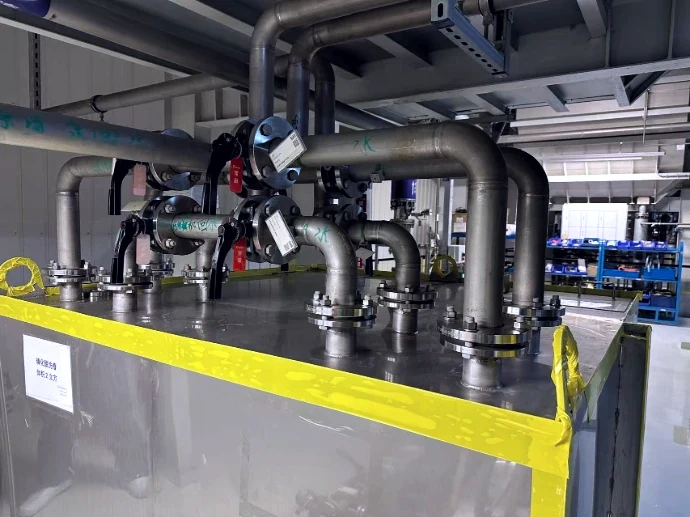
The pretreatment system delivers a clean metal surface with appropriate roughness for maximum coating adhesion.
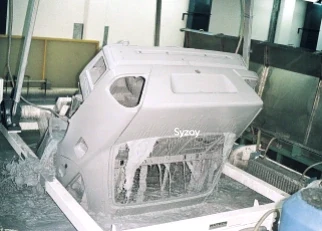
The electrophoresis system is the key process ensuring 10+ years of corrosion resistance for the body.
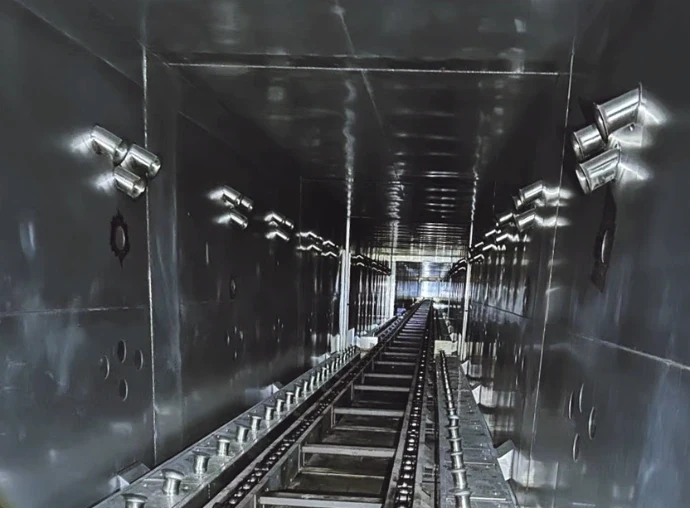
The drying oven cures each coating layer through controlled thermal stages:
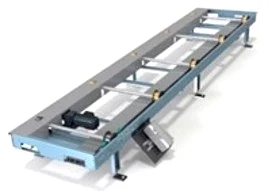
The conveyor accurately and stably transfers the white body between process stations. Coating conveyors have evolved from ground chains to pendulum, skid and multifunctional shuttles.
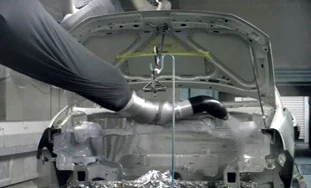
The spraying system is the most core and precise part of the coating workshop — directly determining final color, gloss, brightness and paint utilization. Modern lines are dominated by robotic automatic spraying.
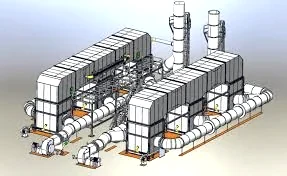
RTO (Regenerative Thermal Oxidizer) is the core environmental equipment for treating painting VOCs (benzene, toluene, xylene) from booths and ovens.
| Parameter | Single Line | Dual Line | Unit |
|---|---|---|---|
| Production Rate | 30-60 | 60-120 | JPH |
| ED Film Thickness | 18-25 | 18-25 | µm |
| Topcoat Film | 35-45 | 35-45 | µm |
| Oven Temperature | 140-185 | 140-185 | °C |
| Temperature Uniformity | ±3 | ±3 | °C |
| VOC Destruction (RTO) | >99 | >99 | % |
Designed by engineers from world-leading coating integrators with 20+ years and nearly 30 lines delivered.
Every oven, booth and steel structure simulated before build — temperature uniformity guaranteed, not estimated.
Faster response and competitive cost versus European brands, with the same proven technology.
Integrated VOC abatement and waste-heat recovery for compliant, low-cost, sustainable production.
| Stage | Key parameters | Typical design range |
|---|---|---|
| Pretreatment | Degreasing temperature / spray pressure | 45-60°C / 0.15-0.3 MPa |
| E-coat (CED) | Bath temperature / film thickness | 28-32°C / 18-22 µm |
| Spray booths | Downdraft velocity / temperature & humidity | Robotic booths 0.3-0.5 m/s; 23±2°C, 60-70% RH |
| Ovens | Temperature / time / uniformity | 140-180°C by paint system / 20-35 min / ±3°C target |
| Conveyors | Cycle time design | Planned for 30-60 JPH with speed interlocks |
| Cleanliness | Booth supply filtration | Ceiling filter media + dry/wet overspray handling |
Typical ranges for quick reference; final values verified against coating system, capacity targets and site conditions.
A complete passenger-car paint shop includes pretreatment and electrophoresis (ED), sealing and primer surfacer, basecoat and clearcoat spraying, oven baking, and inspection. SYZOY delivers full-line planning, equipment and turnkey delivery from pretreatment/ED to spray, drying and conveyance.
Pretreatment removes oil and contamination and forms a conversion coating through degreasing, conditioning and phosphating; cathodic electrodeposition (ED) uniformly deposits paint on all body surfaces by electric field, forming the anti-corrosion primer layer that determines vehicle corrosion life.
Spray booths require constant temperature and humidity (typically 23±2°C, 65±5%RH), staged pressure differentials and organized airflow for film appearance; ovens are designed in ramp, hold and cool zones with hot-air circulation or infrared assistance for temperature uniformity (±3°C achievable). SYZOY sizes and validates these systems against your takt time and process.
Booth and oven exhaust is high-volume, low-concentration VOC air. The mainstream route is zeolite rotor (adsorption concentrator) + RTO regenerative thermal oxidation + heat recovery, achieving 99%+ destruction efficiency with low operating energy. See the VOC Treatment and KPR Rotor pages.
Nearly 30 coating lines delivered. Let us help you plan, build or upgrade yours.


Scan with WeChat
