Automotive Coating Treatment System
A complete automotive coating system typically consists of core processes such as pretreatment, electrophoresis, adhesive application, primer, topcoat, clear coat, and inspection, along with the following six major systems: body transport system, pretreatment electrophoresis system, grinding and sealing system, spraying system, drying oven system, and exhaust gas environmental treatment system.
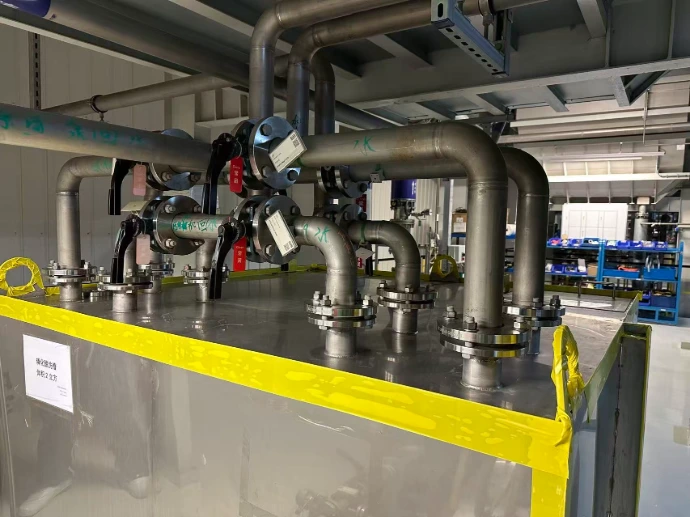
Pretreatment System
New Film Technology: Such as zirconium salt silane treatment, which is more environmentally friendly, produces less residue, and can be performed at room temperature.
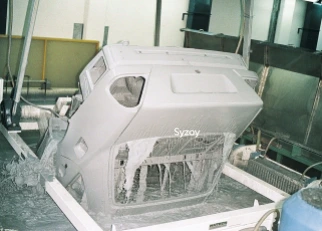
Electrophoresis System
UF Cleaning: After electrophoresis, ultrafiltration liquid is used for cleaning, recovering the paint that has been removed and preventing pinholes in the paint film.
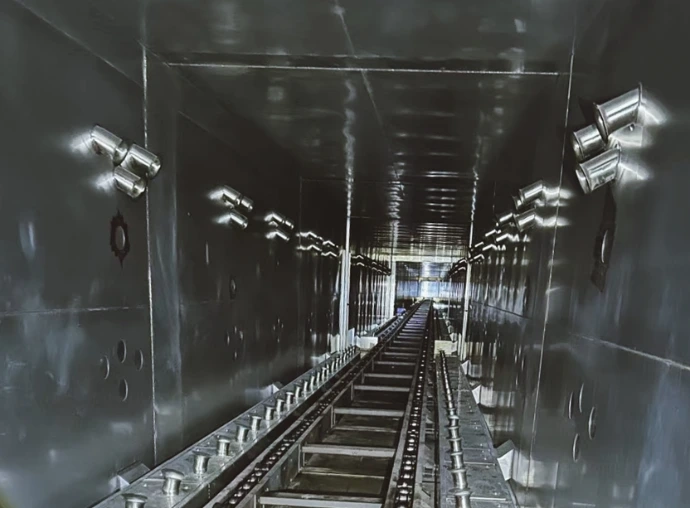
Drying Oven Equipment
Crosslinking Reaction: Upon reaching a specific temperature (e.g., 180°C for electrophoretic paint, 140-160°C for clear coat), the functional groups in the resin undergo a chemical crosslinking reaction (polymerization), forming a three-dimensional network molecular structure. This process is irreversible and imparts the final hardness, weather resistance, chemical resistance, and adhesion to the paint film.
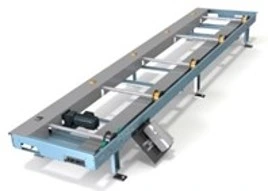
Conveyor System
The conveyor system is responsible for accurately and stably transferring the white body between various process stations (pretreatment tank, spray booth, drying oven, grinding area, etc.).
The coating conveyor system has evolved from ground chains to swing arms, sleds, and multifunctional shuttles.
Swing Arm Chain/Swing Arm Conveyor: The vehicle body is hung on the swing arm by a fixture, and the swing arm can swing up and down.
Spraying System
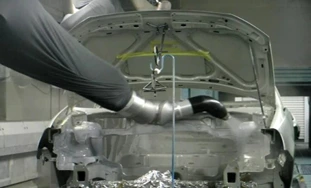
If the transport system is the artery and the drying oven is the internal organ, then the spraying system is the pair of dexterous hands. The spraying system in modern automotive coating is fully dominated by robotic automatic spraying, supplemented by a small amount of manual touch-up.
A complete automatic spraying system typically consists of the following subsystems: paint supply and mixing system, spraying execution mechanism (spraying robot), atomizer responsible for turning liquid paint into tiny droplets, spraying booth environment control system, and overspray mist treatment system (wet venturi/dry curtain separation system).
Exhaust Gas Treatment System
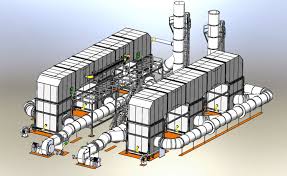
In the automotive coating system, RTO (Regenerative Thermal Oxidizer) is the core environmental protection equipment for treating painting exhaust gases (VOCs). Since the painting workshop (especially the spray booth and drying oven) generates a large amount of exhaust gas containing organic solvents such as benzene, toluene, and xylene, these gases cannot be directly discharged into the atmosphere, and RTO purifies them through high-temperature combustion.
The low-temperature exhaust gas on the other side passes through the preheated ceramic heat storage medium before entering the combustion chamber, absorbing its stored heat, so that the exhaust gas is preheated to near combustion temperature before entering the combustion chamber.